linnenbank_large2

Max for Live Developer : Dave Linnenbank
Interview by Brian Cass
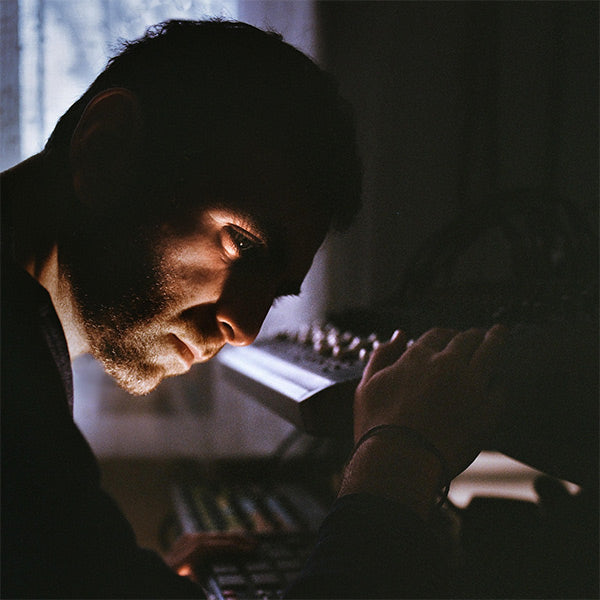
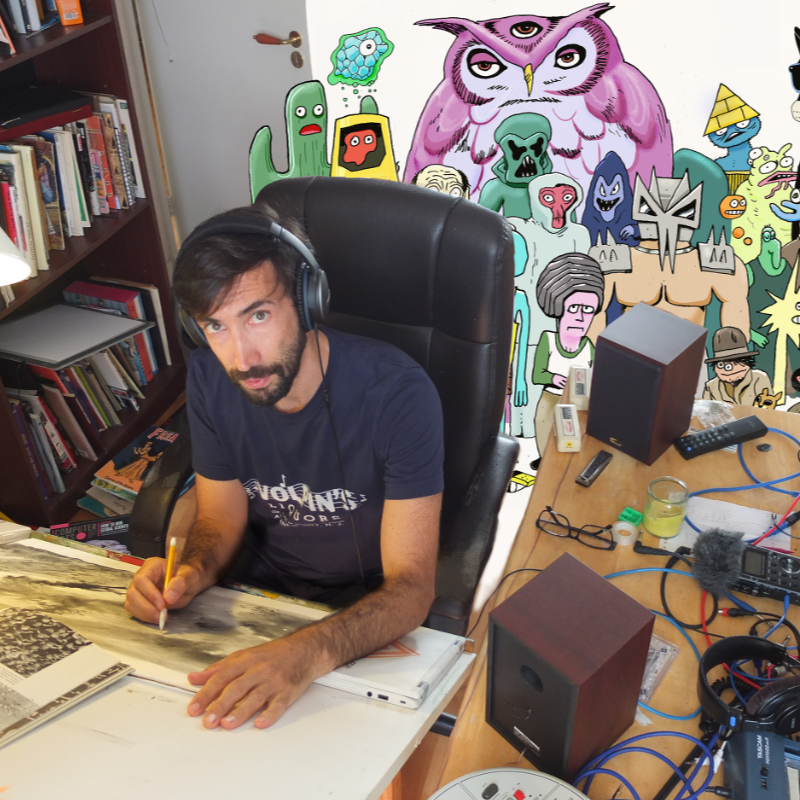
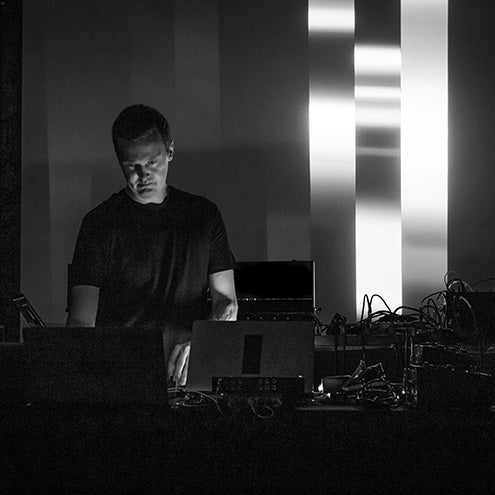
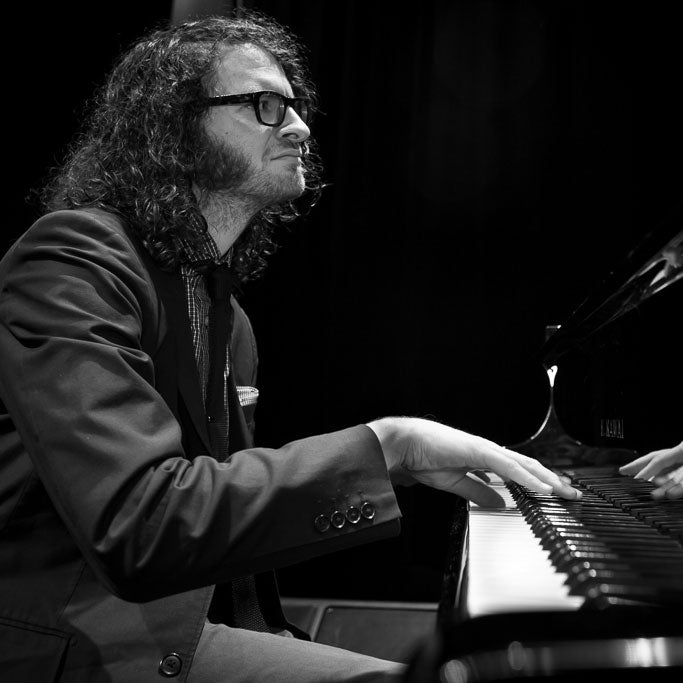
Photo by Vanessa Pyne

Dave Linnenbank has been my Max/MSP guru for almost 10 years now. When Puremagnetik decided to start developing Max for Live devices, it was a clear choice to get him involved. He's also provided support to countless students passing through the computer labs at Berklee College of Music, not just with Max, but just about everything from basic OS understanding to advanced DSP concepts. Besides educating others, Dave has an impressive collection of his own creations in Jitter, Reaktor, Nord Modular systems, JavaScript and a wide variety of musical compositions. I asked Dave some questions in order to introduce him to the Puremagnetik community and to reveal more about the upcoming bundle - Max Fuel, the First.

Puremagnetik has a major focus on new technology, but always maintains a musical perspective. Can you give us a brief history of your musical background?

I started with piano lessons when I was small and got into synthesizers along the way. In middle school, I started playing trumpet in band so by the time high school rolled around, I was playing in the marching band, concert band, jazz band, and accompanying the choir when not singing with them.

At a certain point, my good friends had started a band that only had one guitar player. I figured I could probably get in the band if I learned guitar, and that worked out. I think there is a good analogy here for music technology: when what you are musically doing isn't enough to get you where you want to go, music technology can step in and help you express yourself in a way that you previously couldn't. I think it's more useful to view technology in this value-added way instead of as its own show. There is no substitute for musicality.

What is it about MaxMSP and Jitter that has drawn you to work with this particular platform so much over the years?

Its versatility. The best description I can give of Max – including MSP and Jitter – is that it's a multimedia programming environment. If this sounds broad and vague, it is by design. A new patch in Max is a blank screen, and the program does a good job of helping you realize that once they are inside your system, numbers are numbers. Values coming from a MIDI controller or ASCII keyboard or mouse or even microphone all look pretty similar, and no number in your system has a context until you decide how to use it. This is very comparable to modular synthesis, especially the part where nothing happens until you make some decisions yourself.

I originally got into Max when I was performing in an ambient duo with Ben Pacheco, and I hoped to make a controllable video piece for each song we would play live. Max was up to the task, and eventually I was, too. From there, I've used Max to manipulate and generate MIDI, video and audio as well as communicate with other programs and do more questionable things. What is powerful is that the central portion of a MIDI processing patch, for example, is really just manipulating numbers so the work you do can be very portable, even between different mediums.

Finally, I would say that Max allows you to do things as sophisticated as you like with a reasonably low bar to entry. There is definitely still a learning curve, but making a patch in Max is nothing like programming your own application from scratch. Each of us in this music technology field have to figure out a technical-creative balance that works. For people willing to lean a little more towards the technical side, Max can be very rewarding creatively.

Some of the devices that we are preparing for the Max Fuel bundle are patches that you originally conceived in Pluggo or MaxMSP stand-alone form. What advantages are there now that they are being rebuilt to run inside of Ableton Live?

Max for Live has some clear advantages over Pluggo, the most obvious being that it is not a standard AU or VST plug-in. By working with Ableton, Cycling 74's hand is free to move beyond the various plug-in specification and make any feature that Ableton is willing to allow, and improvements in this direction are likely to continue.

To the Ableton user, this means an interface directly in the Track View section of the screen and a fairly straightforward way to bring most of what Max is capable of into your DAW. From the developer perspective, the Live API that has come about allows integration with Live that would be impossible as a plug-in. If a standard plug-in is a house guest that can do only what the homeowner allows and in the way that they allow it, Max for Live is a piece of the furniture that is free to rearrange the other tables and chairs.

For non-Ableton users, here's to hoping the ice float that Pluggo has been left on holds out a little while longer.

When you are developing these new devices, do you try to imagine what type of music will be made with it - once it is in someone else's hands?

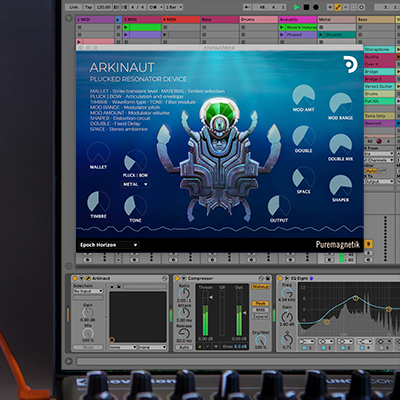
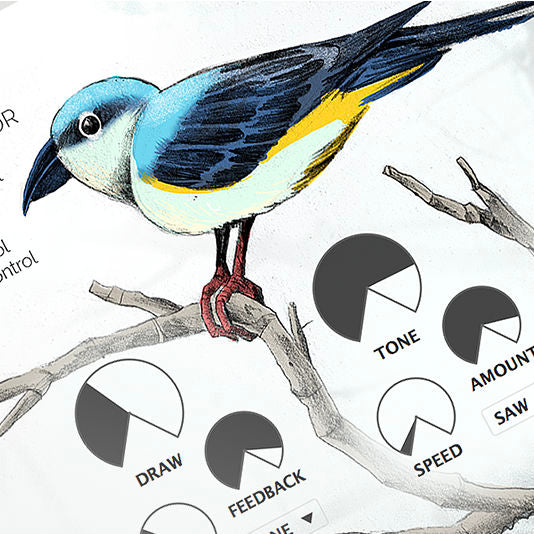
I don't imagine what people will do all that much. I just try to make the devices like instruments that give you a good range of directions to go in and can be performed. I find viewing even plug-ins as 'instruments' in the performance sense makes them laid out better and helpful. You can see this in the Spectral Mixer teaser where a premium has been put on making the parameters easy to grab, tweek and adapt on the fly with a wide range of possible outcomes. To me, giving people a modest range of possibilities and intuitive controls makes a successful device.

In the forthcoming Max Fuel, the First, there will be a mix of useful ideas such as devices where the emphasis is on performability, some souped-up effects in a multiband context, a synthesis-based instrument that thuds, several ways to manipulate the plug-ins you already know and love, and some simple ideas that fill longstanding gaps in Live's arsenal.

Can you tell us a little about the first Max patch you ever made?

My first patch was a honky-tonk piano generator. This sounds a lot fancier than it really is, but it still has its charm. Since you asked, Brian, I just cleaned it up to use some more modern objects and posted in on my webpage.

If you haven't touched Max before but want to open the patch, you can download the latest version of Max from Cycling74.com. The good people of Cycling 74 have always included very good documentation and tutorials with their programs. If you do start learning Max, remember that any patch you look at approaches its task in just one way, and there are countless ways to solve a task. Thinking there is only one way to do something in Max greatly limits your potential, a lot like thinking an envelope generator is only made to control an amplifier.

I should also mention that starting with Max means starting with messages, regardless of if you really want to do signals (MSP) or video/matrices (Jitter) because everything involves control messages. MIDI is a good way to hear messages and get the hang of things.

Outside of Ableton and Cycling 74, what other software do you find useful and inspiring?

Being a synth guy, the software instruments in Logic have always pleased me, and the plug-ins from WaveArts are powerfully understated. And speaking of ice floats, Clavia used to make some revolutionary products with their Nord Modular line. Nothing is as intuitive as the Nord Modulars, to either beginners or lifers.

Since you said useful, I have to mention LaunchBar from Objective Development. This little productivity tool has really changed the way I use the computer. I generally avoid suggesting workflow changes to other people, but if you use a Mac, stare at the computer screen too much and have a rational hatred of using the mouse, it might be worth demoing LaunchBar.

What is your plan at this point, with work and life and all?

Well, I've been in Boston for 11 years, but personal and professional forces seem to be pulling me toward New York. I'm looking for new opportunities and a lot of them seem to be in New York at this point. I'm down for good work and good projects so we'll see how it goes.

Do you have any other projects that you can tell us about?

I'm coauthoring a book with Tom Rhea that will get done sometime this year. Other than that and Max Fuel, the First, there is always a solo album and some collaborations on the horizon. Maybe that's the secret to staying relevant in music technology: remembering that it's all about music.

See more about Dave Linnenbank
http://rhymeswithart.com
http://dave.rhymeswithart.com

facebook_button_1 twitter-button youtube soundcloud

Clap Box